Skip to content
Cultural Evolution
Meeting the Pain of the World: A Path to Collective Healing
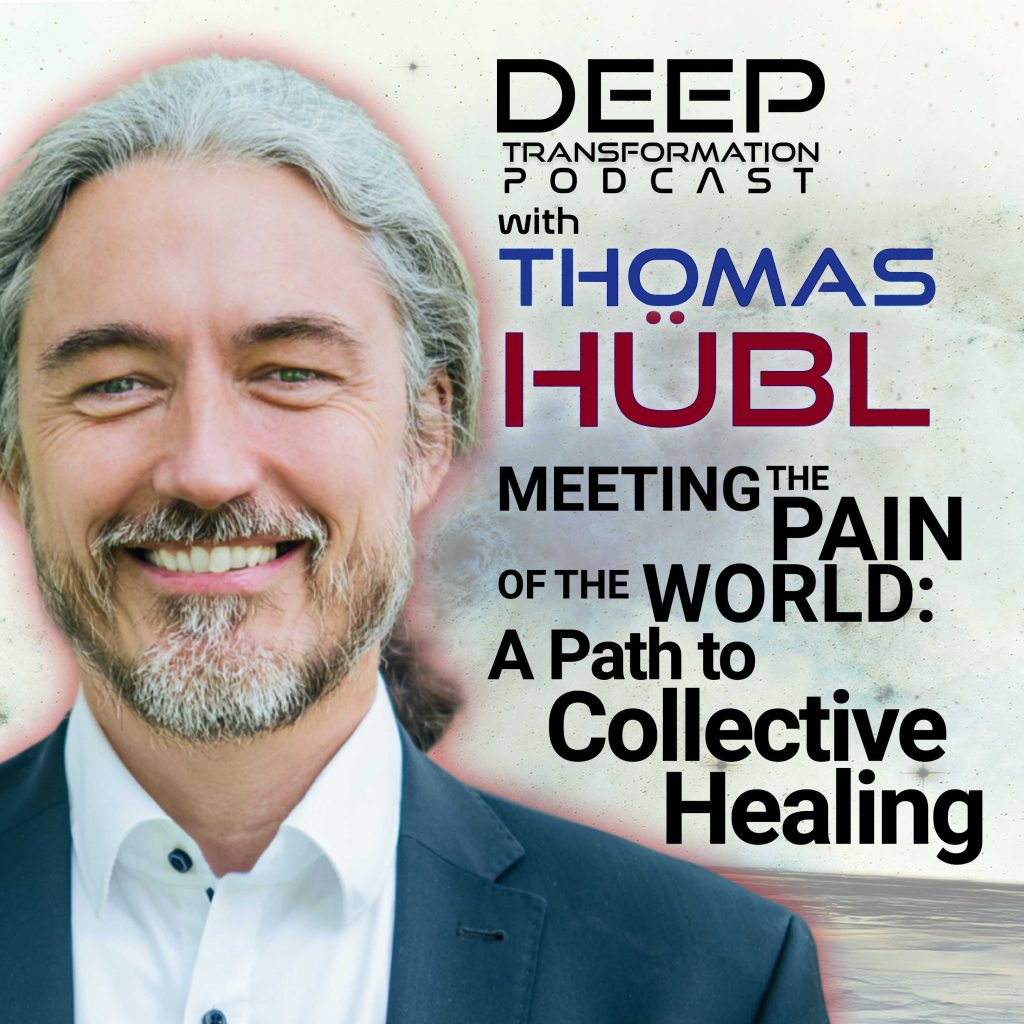
“Unconscious information is destiny. Conscious information has a choice, has a future.”
In this brilliantly articulated and illuminating conversation, renowned international facilitator Thomas Hübl shares his deep understanding of the dynamics of collective trauma as well as practical wisdom about how we can heal the large, often inherited, wounds we carry. Thomas conveys the magnitude of problems created by shoving our collective wounds out of sight and mind, perhaps the worst consequence of which is when we do this, we are destined to repeat the same horrors over again. What we need, Thomas explains, is to develop an architecture that would provide a healing space to deal with our wounds (racism, genocide, and immigration, to name a few). Meeting our collective pain in this way would allow us to mature to a level of forgiveness where we could collaborate globally on urgent issues like AI and climate change. Without this healing, Thomas says, the energy that can forgive remains frozen in the wound.
The dialogue becomes profoundly hopeful as Thomas describes someone who has met their pain and healed themselves of individual and collective trauma. Listening is like receiving a transmission—for a moment we feel ourselves to be this person: integrated, authentic, vulnerable, fully attuned to our reality, at peace with both the beauty and the difficulties, free of false hopes and unrealistic dreams. If we could embrace the power of collective healing that Thomas has witnessed again and again in his work, and “melt the permafrost of our collective trauma,” we could step out of the never-ending cycle of violence, cruelty, and misunderstanding that will otherwise continue to haunt us. This conversation goes right to the heart of things: if we recognize our interrelatedness and find a way to practice interdependence, we can grow beyond our individual and collective pain into a tremendously more hopeful future. Recorded October 30, 2025.
Read MoreWhen Soul, World & God Became Separate: The Loss, the Paradox & the Promise of Integration
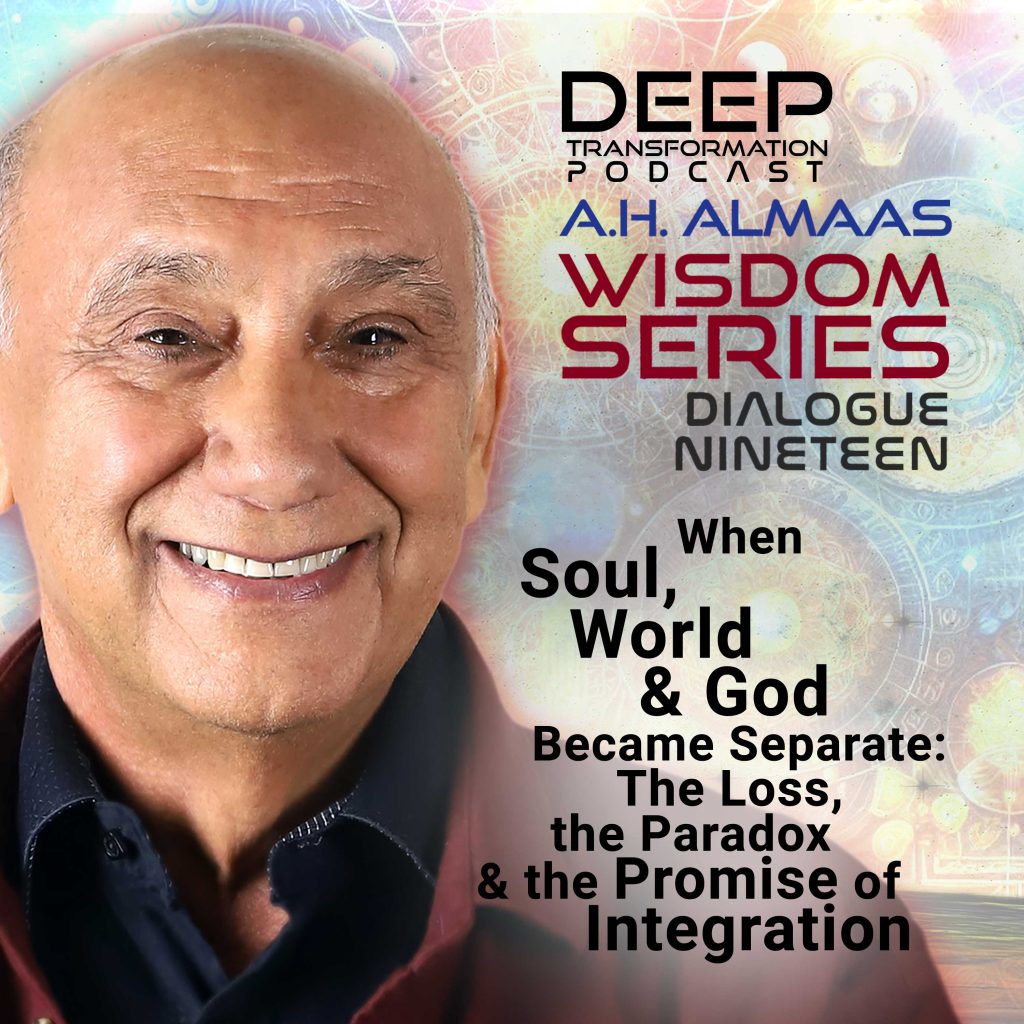
“The spiritual ground that science doesn’t deal with is needed to complete the story.”
Ep. 237 | In the 19th dialogue of the A. H. Almaas Wisdom Series, an exploration of the final chapter of The Inner Journey Home, Hameed Ali looks at the evolution of Western culture and how it happened that soul, world, and God became divided as the culture developed. Hameed explains this was a necessary evolutionary step, an inherent part of our development, and though we lost our spiritual footing in the process (with secularization came a “gaping emptiness, meaninglessness, a lack of true fulfillment”), the separation of science and Church freed science and later psychology to take off on their own trajectories, leading to great strides in our understanding of our physical world and psychological make-up. The secularization of society turned out to have plenty of benefits, including improving the physical and economic well-being of many.
But where does that leave us now, and what does the future hold? Will there be an integration of these disparate parts, where spiritual ground becomes a foundational piece of our next stage of evolution? Can the scientific perspective, with its precision and clarity of mind, be brought to bear on our inner life of spiritual inquiry as well as the outer nature of reality? In realizing that our soul needs life’s encounters to mature—meditation alone is not enough—will we find the lost “pearl beyond price” individually and possibly collectively or in small groups? Hameed concludes by telling us that the Diamond Approach is about redeeming the mind: integrating the diamond clarity of the intellect with spiritual depth. He shares his vision of fully realized scientists merging a spiritual perspective with precise and penetrating inquiry, and ends with the wish for all human beings to know: “People who are listening… it’s possible for you.” Recorded June 11, 2026.
Read MoreWhen One Sex Loses, Everyone Loses: Warren Farrell on the Boy Crisis, Dad-Deprivation & Healing the Gender Divide
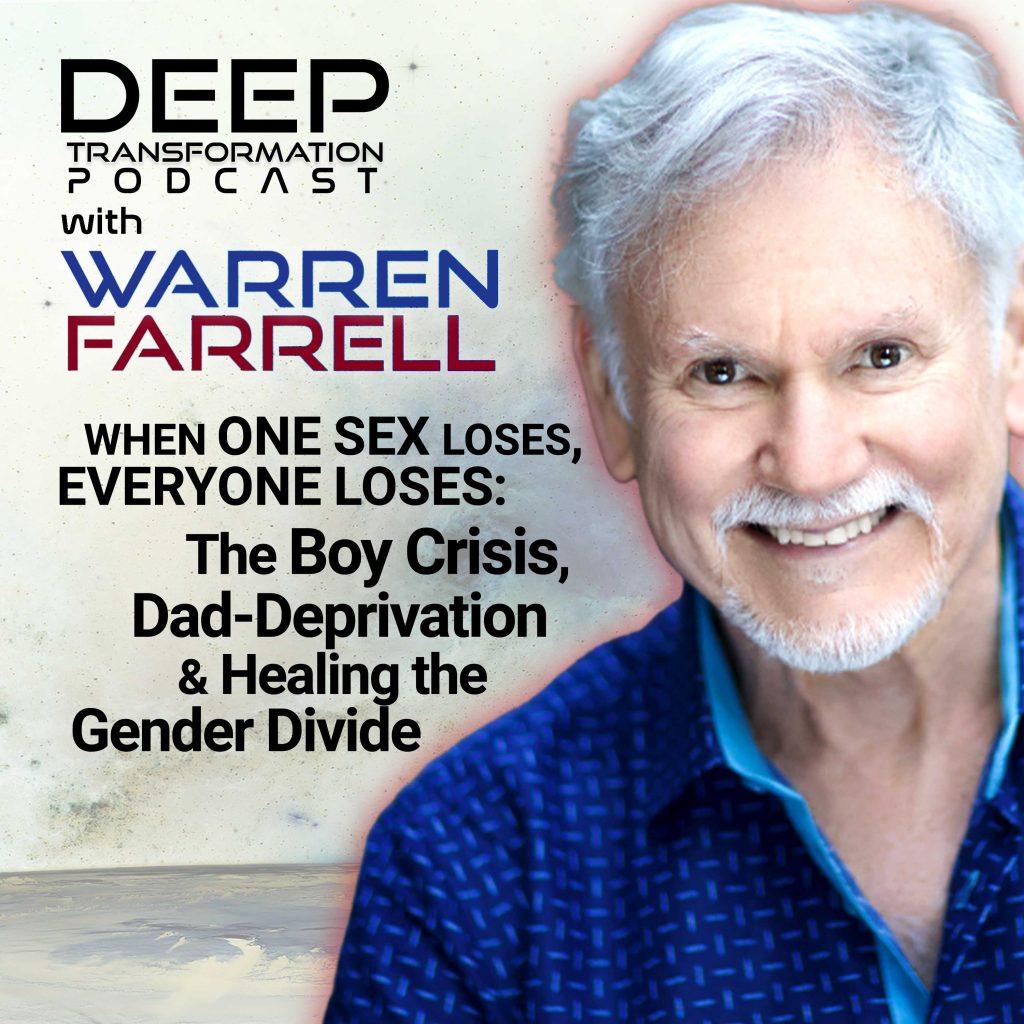
“We’re all in this together. We’re all in the same family boat.”
Ep. 234 | Renowned thought leader, speaker, and prolific author Warren Farrell has a passion for getting the truth out about issues that matter deeply—issues with enormous human consequences that might begin to heal if people better understood the forces driving these trends: the boy crisis, fatherlessness, the cultural tendency to vilify men, and the lack of healthy and effective communication between men and women. Warren has authored several data-driven bestselling books that go right to the heart of these matters, and in this conversation his expertise is clearly evident, right alongside his dedication to do everything he can to shift the evolution of the harmful idea that women are good but men are bad.
Warren has put himself on the line time and again to stand up for fatherless boys. He puts out a clarion call to couples to communicate with care, so that a father can be involved with the raising of a child, and in his books and workshops, Warren offers concrete steps to minimize children’s trauma, such as his four must-do’s after a divorce and the caring and sharing practices he teaches couples around accepting criticism without getting defensive. Immensely insightful, immensely practical, Warren points the way forward through a territory that has become murky, difficult, and hateful. Guaranteed, you will learn things about our contemporary culture you didn’t know before, and be inspired to do what you can to heal the disastrous divide between the sexes. Recorded September 25, 2025.
Read MoreKeith Martin-Smith (Part 3) – The Wonderful Ideals But Flawed Applications of DEI: Intolerant Tolerance, Undiverse Diversity, Unliberal Liberalism, and More

Ep. 147 (Part 3 of 3) | Award-winning author, Zen priest and teacher, Kung Fu master, and professional advisor and trainer, Keith Martin-Smith, took a good look at the diversity, equity, and inclusion movement when he began to notice the damage it was causing people he knew under the guise of progress, or equity. Putting his keen mind to the task, Keith identified seven key areas where the DEI movement goes markedly astray from the values it aspires to. Coming from an integral understanding, Keith does more than simply point out where the movement has backfired. We learn that postmodern thinking is how we became aware of the “subtle soup of racism [and bias] in the cultural field itself”—beyond the concrete, obvious social injustices that activists fought in the 20th century. This more subtle field of bias is responsible for the inequalities we see in society today, which is what the DEI movement would like to tear down. But the ways in which DEI acts to make this happen, ironically, are characterized by exactly the things that DEI is against: intolerance, inequity, undiversity, tribalism, and anti-liberalism.
In his wise, articulate, and gracious way, Keith makes sense of why the diversity, equity, and inclusion movement has become a political flashpoint, raising the hackles of not only rightwing conservatives but also liberal progressives. Sympathetic to the values of DEI, Keith is all about helping to create a more diverse, equitable, and inclusive movement. When asked how the values of DEI could be fulfilled to make it the harmonious, effective, correcting movement it aspires to be, Keith responded, “with conversations like this, for one thing,” adding, “we need to realize that everyone has a portion of truth—we just need to connect everyone’s portion of truth with their heart.” Recorded June 6, 2024.
Read MoreKeith Martin-Smith (Part 2) – The Wonderful Ideals But Flawed Applications of DEI: Intolerant Tolerance, Undiverse Diversity, Unliberal Liberalism, and More

Ep. 146 (Part 2 of 3) | Award-winning author, Zen priest and teacher, Kung Fu master, and professional advisor and trainer, Keith Martin-Smith, took a good look at the diversity, equity, and inclusion movement when he began to notice the damage it was causing people he knew under the guise of progress, or equity. Putting his keen mind to the task, Keith identified seven key areas where the DEI movement goes markedly astray from the values it aspires to. Coming from an integral understanding, Keith does more than simply point out where the movement has backfired. We learn that postmodern thinking is how we became aware of the “subtle soup of racism [and bias] in the cultural field itself”—beyond the concrete, obvious social injustices that activists fought in the 20th century. This more subtle field of bias is responsible for the inequalities we see in society today, which is what the DEI movement would like to tear down. But the ways in which DEI acts to make this happen, ironically, are characterized by exactly the things that DEI is against: intolerance, inequity, undiversity, tribalism, and anti-liberalism.
In his wise, articulate, and gracious way, Keith makes sense of why the diversity, equity, and inclusion movement has become a political flashpoint, raising the hackles of not only rightwing conservatives but also liberal progressives. Sympathetic to the values of DEI, Keith is all about helping to create a more diverse, equitable, and inclusive movement. When asked how the values of DEI could be fulfilled to make it the harmonious, effective, correcting movement it aspires to be, Keith responded, “with conversations like this, for one thing,” adding, “we need to realize that everyone has a portion of truth—we just need to connect everyone’s portion of truth with their heart.” Recorded June 6, 2024.
Read MoreKeith Martin-Smith (Part 1) – The Wonderful Ideals But Flawed Applications of DEI: Intolerant Tolerance, Undiverse Diversity, Unliberal Liberalism, and More

Ep. 145 (Part 1 of 3) | Award-winning author, Zen priest and teacher, Kung Fu master, and professional advisor and trainer, Keith Martin-Smith, took a good look at the diversity, equity, and inclusion movement when he began to notice the damage it was causing people he knew under the guise of progress, or equity. Putting his keen mind to the task, Keith identified seven key areas where the DEI movement goes markedly astray from the values it aspires to. Coming from an integral understanding, Keith does more than simply point out where the movement has backfired. We learn that postmodern thinking is how we became aware of the “subtle soup of racism [and bias] in the cultural field itself”—beyond the concrete, obvious social injustices that activists fought in the 20th century. This more subtle field of bias is responsible for the inequalities we see in society today, which is what the DEI movement would like to tear down. But the ways in which DEI acts to make this happen, ironically, are characterized by exactly the things that DEI is against: intolerance, inequity, undiversity, tribalism, and anti-liberalism.
In his wise, articulate, and gracious way, Keith makes sense of why the diversity, equity, and inclusion movement has become a political flashpoint, raising the hackles of not only rightwing conservatives but also liberal progressives. Sympathetic to the values of DEI, Keith is all about helping to create a more diverse, equitable, and inclusive movement. When asked how the values of DEI could be fulfilled to make it the harmonious, effective, correcting movement it aspires to be, Keith responded, “with conversations like this, for one thing,” adding, “we need to realize that everyone has a portion of truth—we just need to connect everyone’s portion of truth with their heart.” Recorded June 6, 2024.
Read MoreBrendan Graham Dempsey (Part 2) – How and Why Cultures Evolve, and the Emerging Stage of Metamodernism

Ep. 134 (Part 2 of 2) | Author, podcaster, farmer, and poet, Brendan Graham Dempsey, brings passion, dedication, clarity, and outstanding scholarship to the fascinating and enormously important study of cultural evolution, which operates on both a personal level and a collective one. He illuminates how, when, and why we shift from one cultural worldview to the next, using his own life’s journey through the cultural stages as a map and paints colorful portraits of the outstanding characteristics of each stage: traditional/premodern, modern, postmodern, and metamodern. Brendan enlightens us as to the tumultuous and often lonely and despairing time that occurs when our prior stage has been deconstructed and we find ourselves between worldviews in a liminal space where sensemaking fails. As he puts it, we live in certain worlds to help us navigate reality. But then things change, and we bump up against the limits of things. Now the time has come to update our sense of the world; we are invited to expand and grow.
We come to understand why it is necessary for cultures to evolve—to accommodate ever increasing complexity—and why culture wars and confusion result from misunderstanding a worldview that infiltrates your psyche before it’s ready. Brendan explains why postmodernism does not serve us now, introducing and inviting us to the new, emerging worldview of metamodernism, where there is hope in positivity, affirmation, and aspirational idealism. Hope, and the promise of coming together in a new understanding among peoples, a prerequisite for dealing with the challenges of the global crises that affect us all. Brendan brings a big heart, keen mind, and a lot of verve to these complex subjects, which come alive under his brilliant tutelage. As he points out, deconstructing the psyche can help save the world, adding, this is a lot of what the metamodern community is trying to get the word out about. Recorded May 1, 2024.
Read MoreBrendan Graham Dempsey (Part 1) – How and Why Cultures Evolve, and the Emerging Stage of Metamodernism

Ep. 133 (Part 1 of 2) | Author, podcaster, farmer, and poet, Brendan Graham Dempsey, brings passion, dedication, clarity, and outstanding scholarship to the fascinating and enormously important study of cultural evolution, which operates on both a personal level and a collective one. He illuminates how, when, and why we shift from one cultural worldview to the next, using his own life’s journey through the cultural stages as a map and paints colorful portraits of the outstanding characteristics of each stage: traditional/premodern, modern, postmodern, and metamodern. Brendan enlightens us as to the tumultuous and often lonely and despairing time that occurs when our prior stage has been deconstructed and we find ourselves between worldviews in a liminal space where sensemaking fails. As he puts it, we live in certain worlds to help us navigate reality. But then things change, and we bump up against the limits of things. Now the time has come to update our sense of the world; we are invited to expand and grow.
We come to understand why it is necessary for cultures to evolve—to accommodate ever increasing complexity—and why culture wars and confusion result from misunderstanding a worldview that infiltrates your psyche before it’s ready. Brendan explains why postmodernism does not serve us now, introducing and inviting us to the new, emerging worldview of metamodernism, where there is hope in positivity, affirmation, and aspirational idealism. Hope, and the promise of coming together in a new understanding among peoples, a prerequisite for dealing with the challenges of the global crises that affect us all. Brendan brings a big heart, keen mind, and a lot of verve to these complex subjects, which come alive under his brilliant tutelage. As he points out, deconstructing the psyche can help save the world, adding, this is a lot of what the metamodern community is trying to get the word out about. Recorded May 1, 2024.
Read More