Skip to content
Science
When Soul, World & God Became Separate: The Loss, the Paradox & the Promise of Integration
“The spiritual ground that science doesn’t deal with is needed to complete the story.”
Ep. 237 | In the 19th dialogue of the A. H. Almaas Wisdom Series, an exploration of the final chapter of The Inner Journey Home, Hameed Ali looks at the evolution of Western culture and how it happened that soul, world, and God became divided as the culture developed. Hameed explains this was a necessary evolutionary step, an inherent part of our development, and though we lost our spiritual footing in the process (with secularization came a “gaping emptiness, meaninglessness, a lack of true fulfillment”), the separation of science and Church freed science and later psychology to take off on their own trajectories, leading to great strides in our understanding of our physical world and psychological make-up. The secularization of society turned out to have plenty of benefits, including improving the physical and economic well-being of many.
But where does that leave us now, and what does the future hold? Will there be an integration of these disparate parts, where spiritual ground becomes a foundational piece of our next stage of evolution? Can the scientific perspective, with its precision and clarity of mind, be brought to bear on our inner life of spiritual inquiry as well as the outer nature of reality? In realizing that our soul needs life’s encounters to mature—meditation alone is not enough—will we find the lost “pearl beyond price” individually and possibly collectively or in small groups? Hameed concludes by telling us that the Diamond Approach is about redeeming the mind: integrating the diamond clarity of the intellect with spiritual depth. He shares his vision of fully realized scientists merging a spiritual perspective with precise and penetrating inquiry, and ends with the wish for all human beings to know: “People who are listening… it’s possible for you.” Recorded June 11, 2026.
Read MoreThe Call of the Cosmos: Aligning with Cosmic Evolution & Its Creative Impulse
“If you look at the universe through telescopes, you see stars and galaxies… However, if you engage in a relationship with the universe through, say, devotional or contemplative practices, you discover other qualities.”
Ep. 236 | In The Call of the Cosmos, cosmologist and astronomer Stephan Martin brings a new and revelatory perspective into play on Deep Transformation, sharing his profound knowledge of the evolving cosmos and its relationship with consciousness. To cover the immensity of the mystery we are involved in, Steve explains, we need to look at both the inner dimension—consciousness—and the outer mystery, the cosmos. Steve does a remarkable job of explaining the psychological, spiritual, and ethical implications of living in an evolving universe, and draws fascinating parallels between cosmic evolution and human evolution, and the manifestation of being and cosmos. Steve teaches that we can expand the concept of self from separate, small self to ecological self to planetary self, and beyond—to cosmic self.
Steve says the fundamental essence of the universe is creativity, and invites us to heed the call of the cosmos and align ourselves with cosmic creativity by expressing the whole through our individual modes of being. “What is the causal cosmic chain that leads to our allurement to do a certain thing?” he asks, adding, “13.8 billion years of cosmic evolution have led to this moment.” The universe is participatory, Steve has discovered, and we live in a relational reality. Put on your paradigm shifting hat for this lively, wise, and impassioned conversation. Your relationship with the cosmos will be illuminated for sure, and quite possibly entirely transformed. Steve is also a gifted author; you can explore more in his books Cosmic Conversations, This Playful Universe, Becoming the Change, and soon, Traveling in the Shadow of the Moon. Recorded August 21, 2025.
Read MoreRobert Lawrence Kuhn (Part 2) – Exploring the Mysteries of Consciousness: Asking Life’s Big Questions
“It’s not that we have too many theories of consciousness, it’s that we have one too few.”
Ep. 182 (Part 2 of 2) | Robert Lawrence Kuhn, producer of the popular PBS series Closer to Truth, which explores consciousness, the mystery of existence, and related topics with an open-minded approach, recently authored a remarkable article: “A Landscape of Consciousness,” in which he surveyed over 200 theories about what consciousness is. Robert tells how he inhabited each theory for a few days while writing it up, and discovered that unlike with other fields of knowledge, a study of consciousness produces more theories the more we know, rather than narrowing the field down. He emphasizes we need to be expansive with our universe of understanding of what consciousness is, and realize that how we engage with the Big Questions of life depends upon our particular theory of consciousness.
Robert tells how the Big Questions, notably what is consciousness and why is there something rather than nothing, have called him all his life, leading him to create the Closer to Truth series, to explore these questions with the leading minds of our time. What Robert didn’t know to begin with, but marvels about now, is how the passion for delving into the most fundamental, existential questions we face as humans unifies people around the world, from every demographic, providing a unique and wonderful point of integration. This is a fascinating, warm, engaging conversation that draws us ever farther into an exploration of the mysteries of life, where we glimpse what lies at the core of humanity. Recorded April 17th, 2025.
Read MoreRobert Lawrence Kuhn (Part 1) – Exploring the Mysteries of Consciousness: Asking Life’s Big Questions
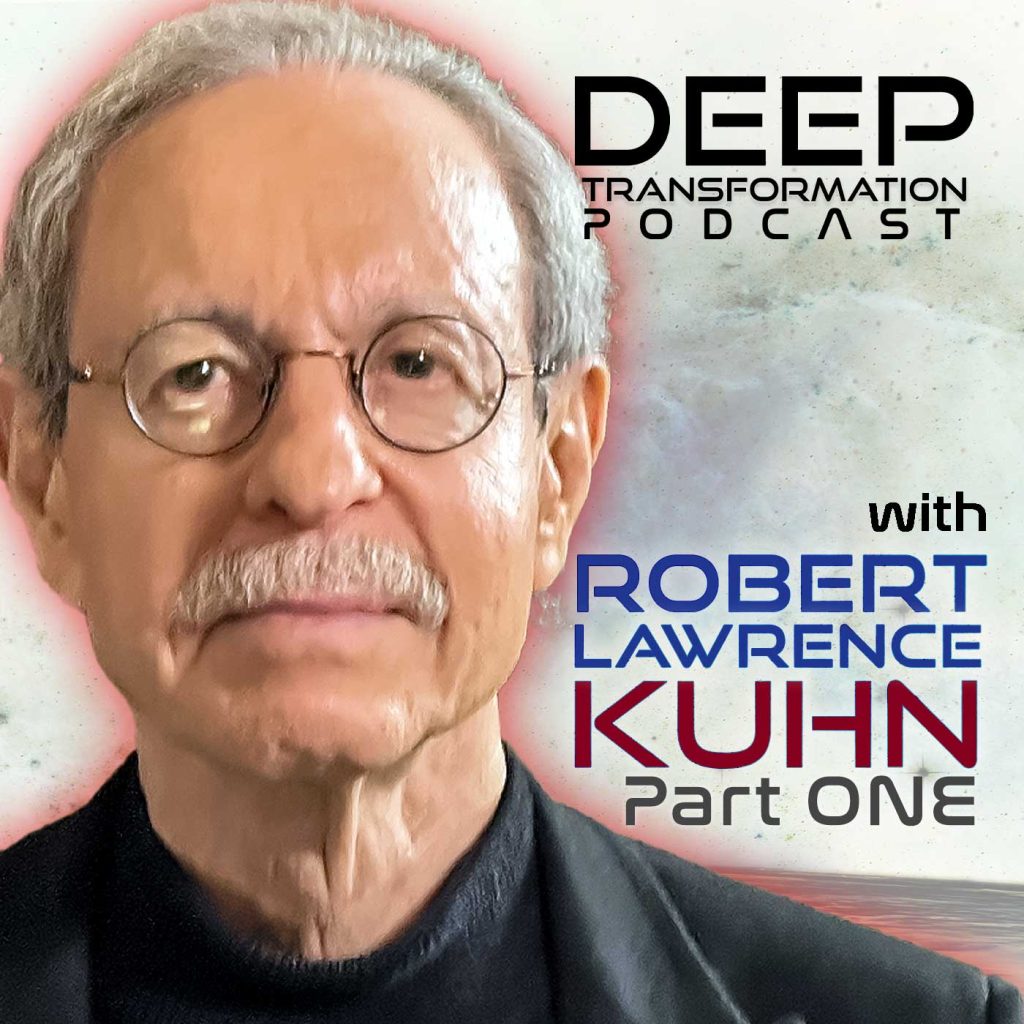
“Consciousness is perhaps the single most unifying question that humanity can explore.”
Ep. 181 (Part 1 of 2) | Robert Lawrence Kuhn, producer of the popular PBS series Closer to Truth, which explores consciousness, the mystery of existence, and related topics with an open-minded approach, recently authored a remarkable article: “A Landscape of Consciousness,” in which he surveyed over 200 theories about what consciousness is. Robert tells how he inhabited each theory for a few days while writing it up, and discovered that unlike with other fields of knowledge, a study of consciousness produces more theories the more we know, rather than narrowing the field down. He emphasizes we need to be expansive with our universe of understanding of what consciousness is, and realize that how we engage with the Big Questions of life depends upon our particular theory of consciousness.
Robert tells how the Big Questions, notably what is consciousness and why is there something rather than nothing, have called him all his life, leading him to create the Closer to Truth series, to explore these questions with the leading minds of our time. What Robert didn’t know to begin with, but marvels about now, is how the passion for delving into the most fundamental, existential questions we face as humans unifies people around the world, from every demographic, providing a unique and wonderful point of integration. This is a fascinating, warm, engaging conversation that draws us ever farther into an exploration of the mysteries of life, where we glimpse what lies at the core of humanity. Recorded April 17th, 2025.
Read MoreJeremy Lent (Part 2) – Big Picture Systems Thinking: A Key Practice for Understanding, Transforming, and Preserving Civilization

Ep. 142 (Part 2 of 2) | Award-winning author of The Web of Meaning and founder of the Deep Transformation Network, Jeremy Lent, relates how his discovery of systems thinking opened the door to a whole new way of making sense of the world and illumined his in depth exploration of what creates meaning. In looking into what forms concepts like God, soul, humanity, nature, and science, Jeremy came to understand the thinking that has led to the existential crisis we face now, then began to explore what it would take to break out of the worldview that has caused so much destruction on so many levels. Jeremy integrates systems thinking with concepts from evolutionary biology, neuroscience, ecology, and traditional and indigenous wisdom, forming a holistic view of science, where “maybe the distinction between science and spirituality isn’t really valid.”
Jeremy’s heartfelt intention is to act as translator—to make it enjoyable for people to explore difficult concepts like consciousness and evolutionary biology they might otherwise steer away from—as well as be a catalyst for large-scale transformation. His vision of a potential future “ecological civilization” builds on the evolutionary success of life itself—ecosystems living in mutual symbiosis—and includes the idea of “islands of coherence” which would provide a bridge from a disintegrating society to a new and flourishing one. Systems thinking, like indigenous wisdom, recognizes the deep connectedness of all things, a realization, Jeremy points out, that leads to the knowing that nothing is inevitable and the choices we make matter. Jeremy leaves us with a sense of agency and of liberation, as well as a sense of responsibility to work together in the shaping of a life-affirming, sustainable future. Recorded June 20, 2024.
Read MoreJeremy Lent (Part 1) – Big Picture Systems Thinking: A Key Practice for Understanding, Transforming, and Preserving Civilization

Ep. 141 (Part 1 of 2) | Award-winning author of The Web of Meaning and founder of the Deep Transformation Network, Jeremy Lent, relates how his discovery of systems thinking opened the door to a whole new way of making sense of the world and illumined his in depth exploration of what creates meaning. In looking into what forms concepts like God, soul, humanity, nature, and science, Jeremy came to understand the thinking that has led to the existential crisis we face now, then began to explore what it would take to break out of the worldview that has caused so much destruction on so many levels. Jeremy integrates systems thinking with concepts from evolutionary biology, neuroscience, ecology, and traditional and indigenous wisdom, forming a holistic view of science, where “maybe the distinction between science and spirituality isn’t really valid.”
Jeremy’s heartfelt intention is to act as translator—to make it enjoyable for people to explore difficult concepts like consciousness and evolutionary biology they might otherwise steer away from—as well as be a catalyst for large-scale transformation. His vision of a potential future “ecological civilization” builds on the evolutionary success of life itself—ecosystems living in mutual symbiosis—and includes the idea of “islands of coherence” which would provide a bridge from a disintegrating society to a new and flourishing one. Systems thinking, like indigenous wisdom, recognizes the deep connectedness of all things, a realization, Jeremy points out, that leads to the knowing that nothing is inevitable and the choices we make matter. Jeremy leaves us with a sense of agency and of liberation, as well as a sense of responsibility to work together in the shaping of a life-affirming, sustainable future. Recorded June 20, 2024.
Read MoreDr. Nikki Mirghafori – Bringing Ethics and Wisdom to AI: Navigating the Ever Growing Potentials & Challenges of Artificial Intelligence
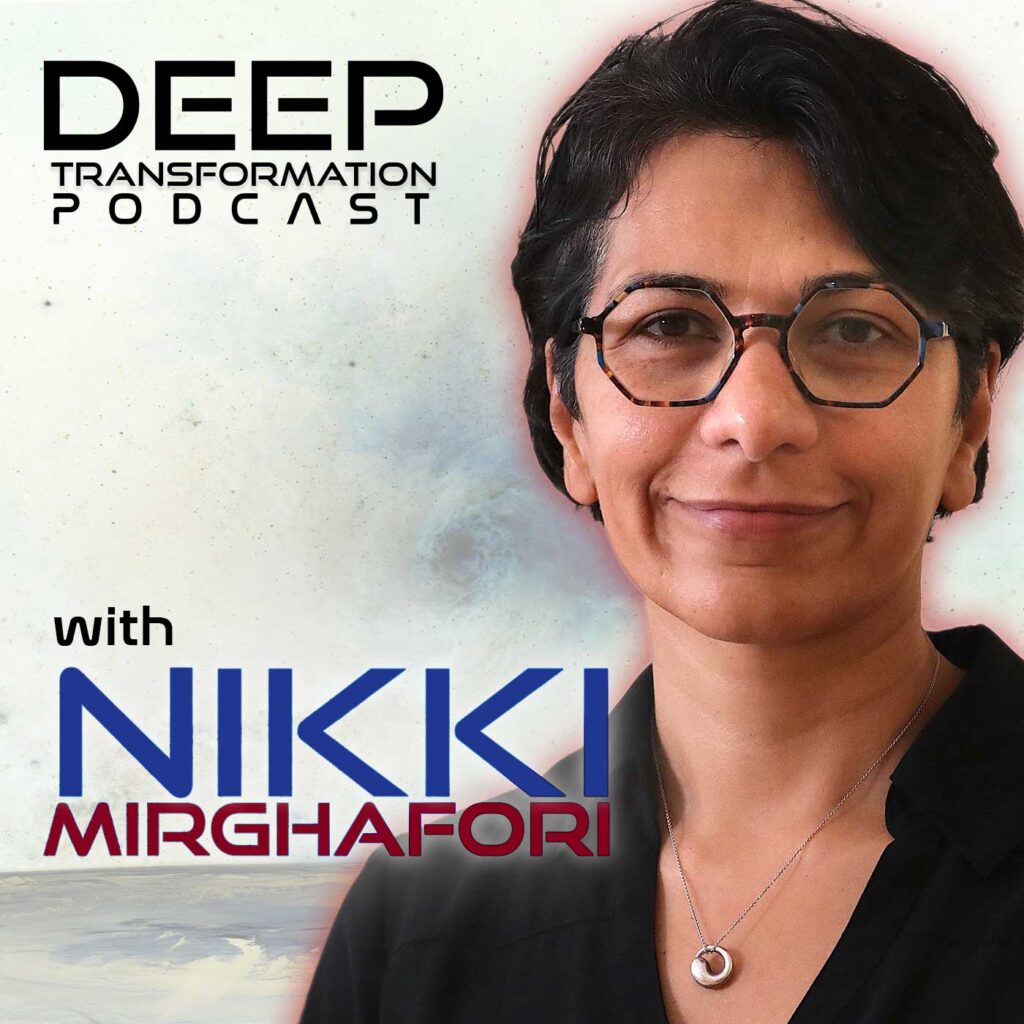
Ep. 124 | In this engaging, informative, and thought provoking conversation, artificial intelligence expert Dr. Nikki Mirghafori gives us a clear picture of where AI technology stands at this point and enlightens us as to its gifts, its potential, and its dangers. Nikki, who is also an internationally acclaimed Buddhist meditation teacher, is passionate about helping to bring equanimity to the whole issue of AI and emphasizes that the fear mongering going on around it is doing all of us a real disservice. She opens our eyes to the enormous potential of AI as applied to global issues such as cleaning up the environment, ending hunger, providing clean water, improving methods of food production—even acting as a wise mentor in supporting people to be their best selves. Nikki tells us that ethical use of AI depends on both designers and users, and that we are not powerless in the way things unfold.
How can AI systems be benevolent and supportive and bring out the best in us? Will we be able to maintain our values and ethics as our use of AI continues to expand? If our perception of AI was sort of murky or limited before, this conversation effectively brings us to a much more informed understanding. Nikki explains everything from where we have been exposed to AI without knowing it, the important distinction between weak/narrow AI and strong/general AI (AGI), personal choice engineering, our natural tendency to anthropomorphize AI, and the difference between benevolent AI and compassionate AI. Nikki is a superb teacher and a pleasure to listen to; this conversation is invaluable in its timeliness and its ability to bring us all up to speed on AI. Recorded January 29, 2024.
Read More