Skip to content
Podcast Episodes
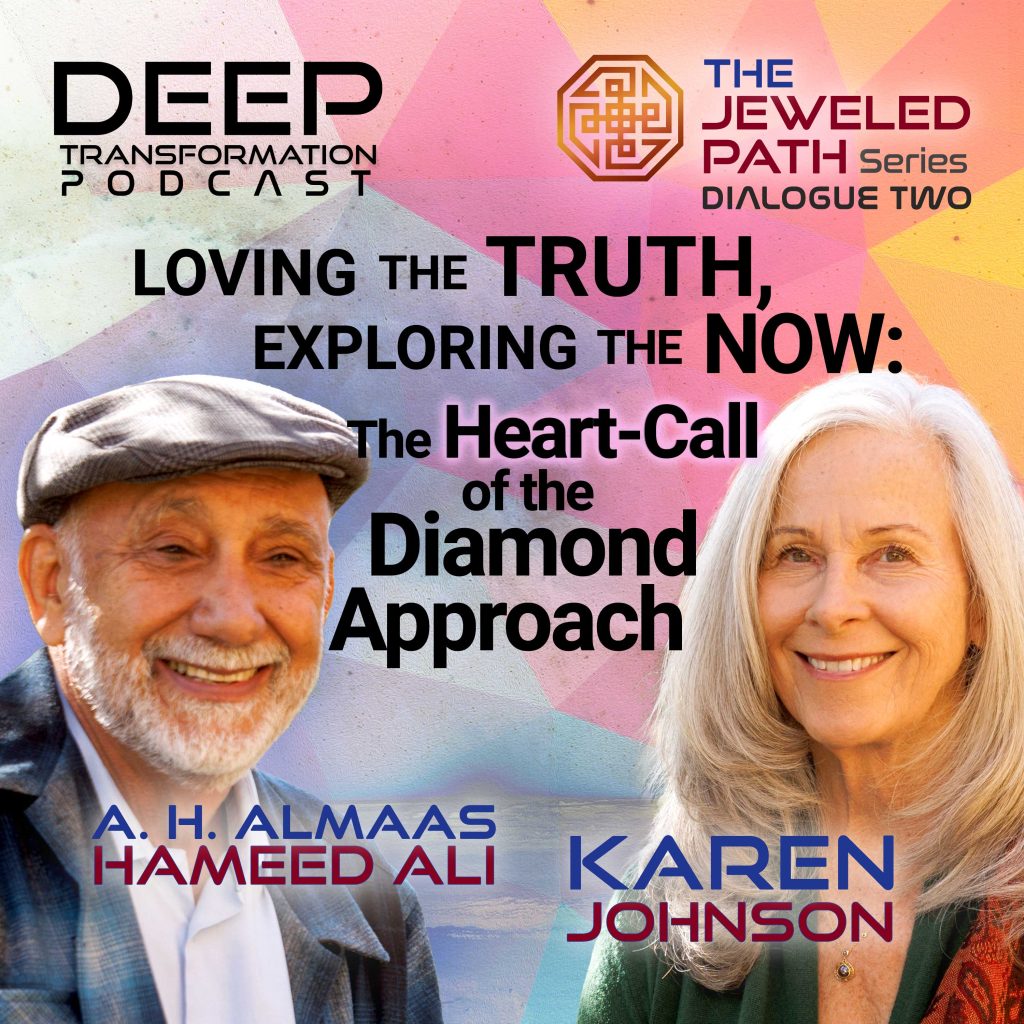
Loving the Truth, Exploring the Now: The Heart-Call of the Diamond Approach
“If you are interested in what is happening right NOW, that now is the point of departure that enables another dimension to come into play.”
Ep. 244 | In the second dialogue of The Jeweled Path Series, Karen Johnson and Hameed Ali continue to animate the Diamond Approach teaching with their remarkable stories and insights, loosely following the structure of Karen’s biography of the Diamond Approach, The Jeweled Path. Karen and Hameed delve into the subject of inquiry: the unique way it is practiced on the Diamond Path, it being a rare marriage of mind and heart, and the compelling way it opens the door for presence to make itself known. As Hameed puts it, “This type of inquiry pierces the veils of all the ways consciousness comes forward—in body, mind, and heart.” “The most necessary question is, ‘What’s happening NOW?’” Karen continues, vividly bringing forth what it feels like to be on the brink of Now, the departure point for experiencing further dimensions of consciousness.
It is a marvel how these two spiritual teachers are so much in sync discussing deeply profound subjects like the relationship of the human soul, ego, and consciousness, what it means to become a “pearl beyond price,” and how the soul is what gives true nature life. They are joined in their deep love and appreciation for consciousness itself—its beauty, multidimensionality, and the force of its teaching—and express how touched they are by its desire to break through to us and communicate. Karen and Hameed say our souls are a substance of consciousness, and the way this conversation stirs and moves our heart, it would seem that the luminous beingness deep in our soul is listening in. Recorded September 10, 2026.
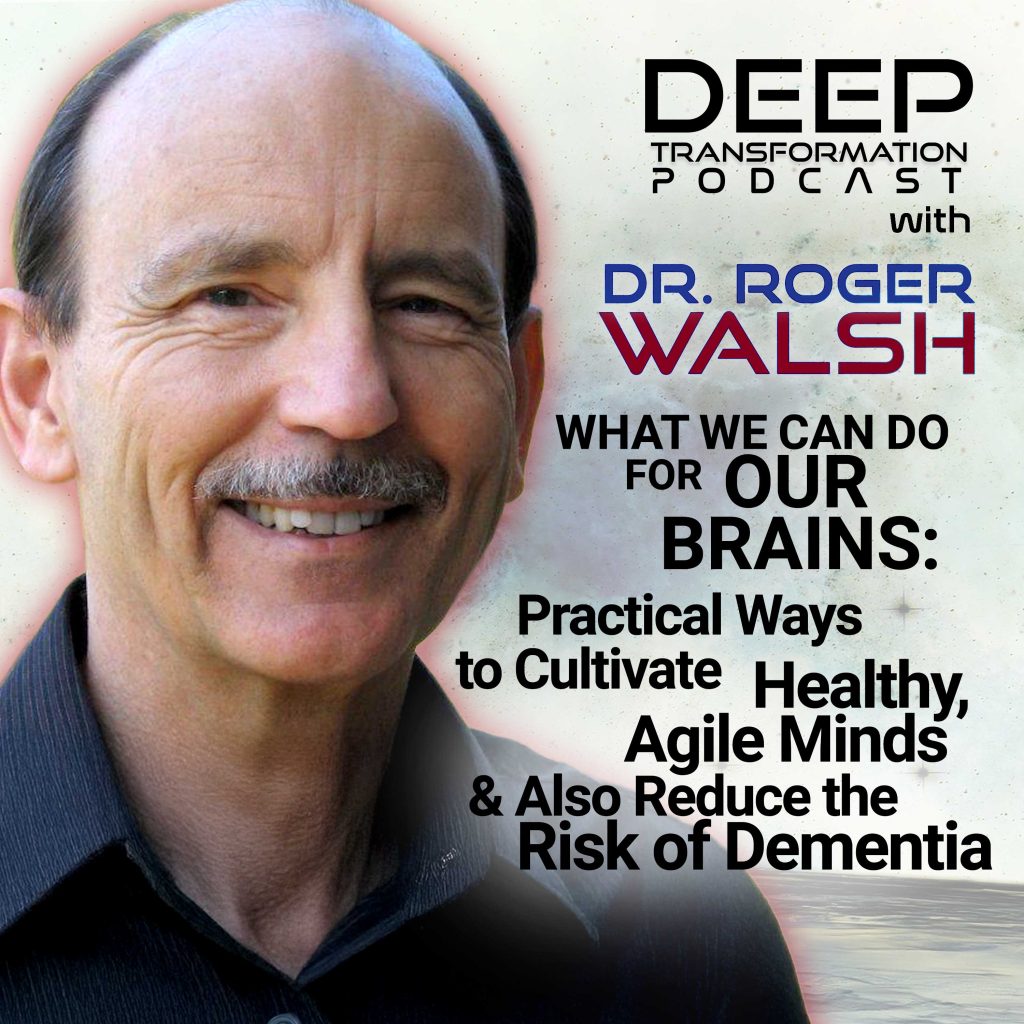
What We Can Do for Our Brains: Practical Ways to Cultivate Healthy, Agile Minds & Also Reduce the Risk of Dementia
“If you’ve got to pick one thing, exercise is probably the best thing we’ve got for maintaining the brain and the body.”
In this outstandingly useful and timely conversation, Dr. Roger Walsh (more often the co-host of the Deep Transformation podcast) is our expert guest, sharing his passion for brain health and his knowledge about what we can do to keep our brains active, high-functioning, and well. With a Ph.D. in neuroscience and several awards for brain research, Roger was also on the first research team to discover the brain’s neuroplasticity, and he has been excited about the possibilities and developmental implications of this ever since. Whether we’re talking about the body’s physical capabilities or the brain’s cognitive ones, Roger explains that a lot of what we thought was “normal” aging is actually “disuse atrophy”—in other words, use it or lose it—and beyond that, cultivate it and enhance it! Roger would like to write a book on all the helpful information he has learned about brain health, but with people he cares for beginning to acknowledge they are wrestling with cognitive decline, he decided it’s time to get this information out now.
After establishing the brain’s inherent potential for growth, Roger dives into the practicalities—outlining actions we can take that research shows will make a significant difference in either enhancing our cognitive functioning, increasing our longevity, reducing the risk of dementia, supporting a life of physical and mental well-being, or all of the above. From the startlingly beneficial effects of green tea to the harmful effects of plastics, pesticides, and wildfire smoke, Roger covers all the bases: exercise and diet, supplements and sleep, environmental risks and medical interventions, friendships and nature, meditation and service—in a way that feels inspiring and doable. This is brain health for everyone in a comprehensive nutshell, presented with Roger’s signature clarity, astuteness, warmth, and humor. Listen and reap the benefits. Recorded September 3, 2026.
The information about brain care in this dialogue is not meant to constitute personal medical advice for any individual. Rather, it is information that listeners can take to their personal physician to discuss and assess with the physician.
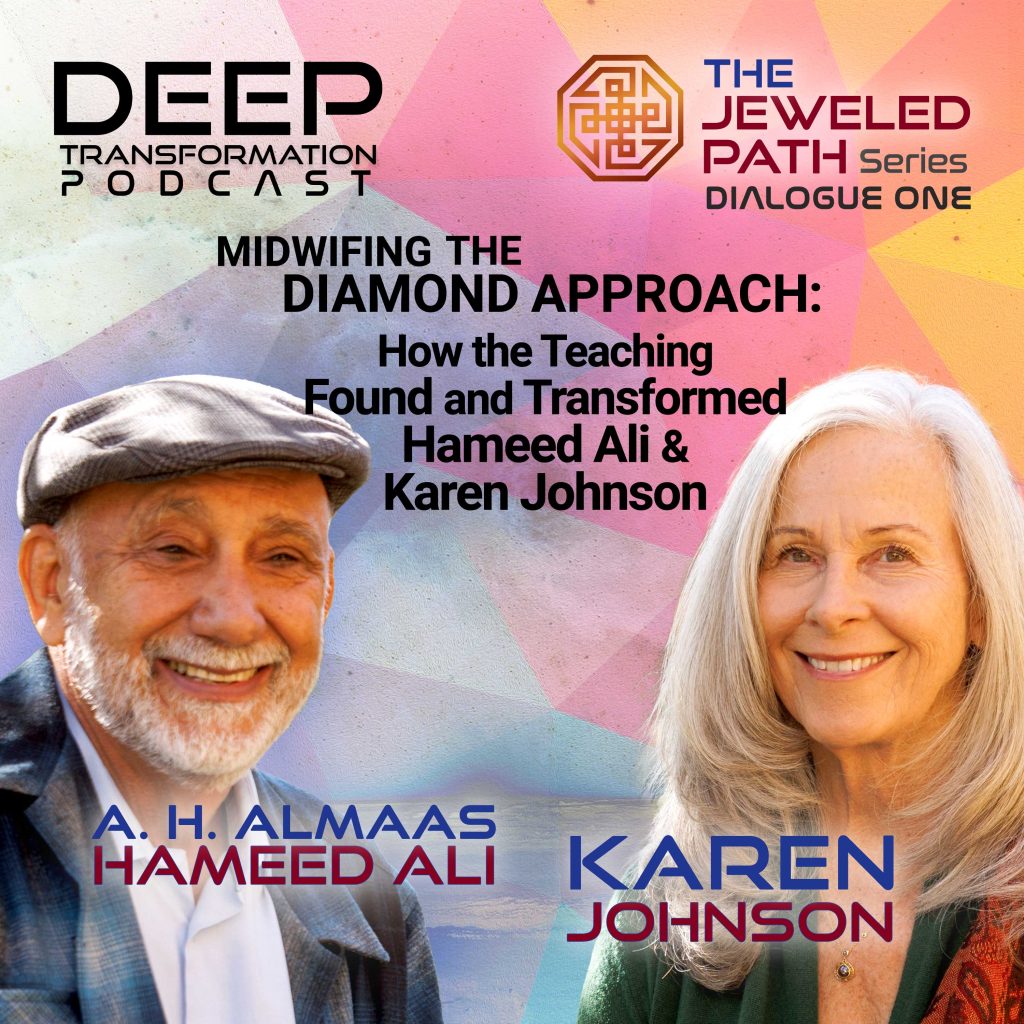
Midwifing the Diamond Approach: How the Teaching Found and Transformed Hameed Ali & Karen Johnson
“The interesting thing about presence is, if you talk about it when it’s not there, it’s just an idea—because presence is only now.”
Ep. 242 | What a gift to have Karen Johnson and A. H. Almaas (Hameed Ali) together in conversation to explore their extraordinary journeys of awakening and share the remarkable ways presence found to transform their hearts and minds—all of which culminated in the contemporary spiritual path known as the Diamond Approach. Karen’s book, The Jeweled Path (the basis for this Jeweled Path Series), chronicles Karen and Hameed’s spiritual adventures from the beginning: what happened in their childhoods, how they first met, the emerging realization that what they were experiencing was shaping into a unique path of awakening that others could follow and benefit from also, through the establishment of the Ridhwan School, home of the Diamond Approach.
In this dialogue, Karen tells how incredible spiritual experiences would come to them right in the midst of life—in the grocery store, on the way to work, in a bar… And we hear the resonant story of when Hameed poured a life-changing transmission of presence into her hand. Karen and Hameed’s vivid descriptions of what they experienced—“explosions of consciousness,” “streams of awakening,” “becoming a body of light, fullness, and presence, nowness embodied”—are awakening transmissions in their own right. And the point they drive home—that they were not the founders of the Diamond Approach, rather the teaching found them—has the magical effect of opening us to see reality in a different way. Listening to Karen and Hameed discuss their experiences, insights, and the emergence of the Diamond Path is simply an amazing experience on its own. Recorded August 13, 2026.
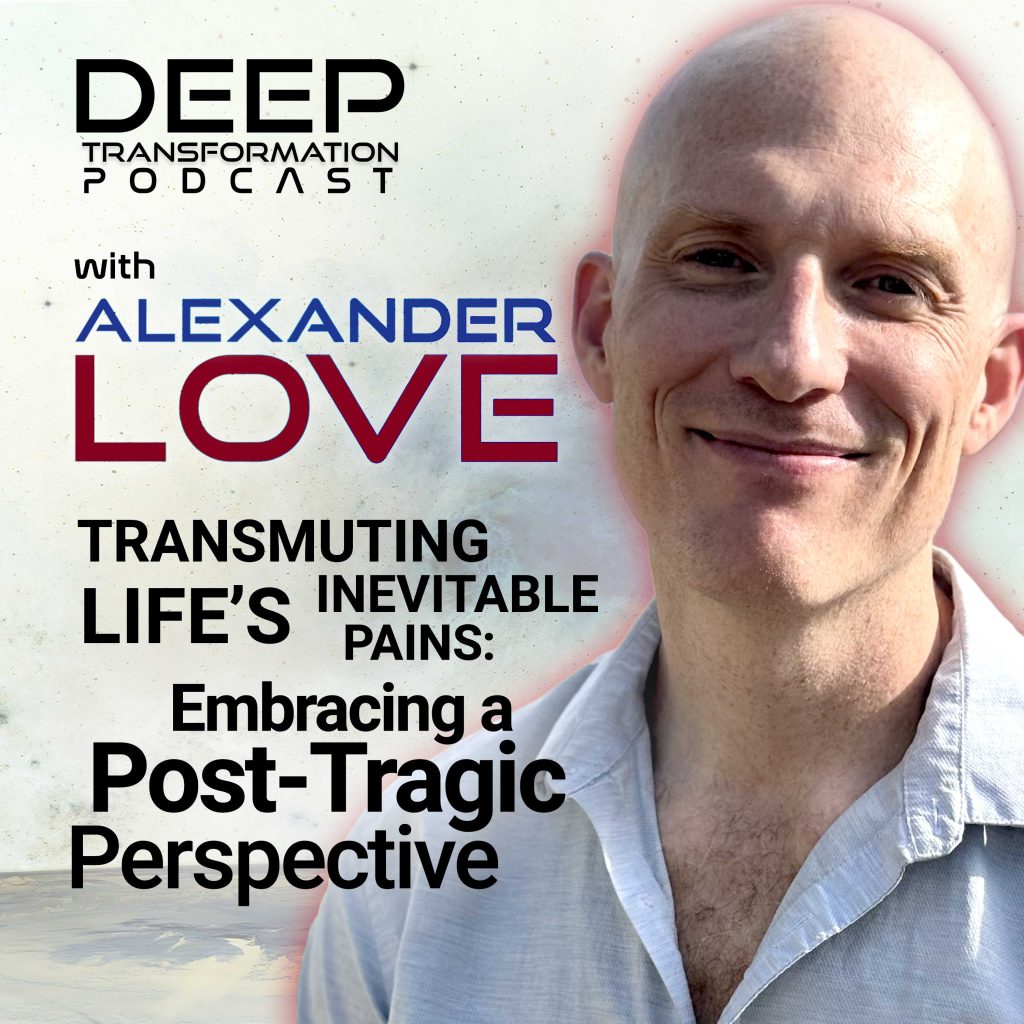
Transmuting Life’s Tragedies: Embracing a Post-Tragic Perspective
“It’s not forgive and forget… It’s remember deeply. Become so intimate with what happened, feel every aspect of it, and let it be transformed by love.”
A deeply engaging conversation in which Alexander Love, adult development expert and coach, and author of the soon-to-be-published trilogy Evolutionary Gestures, introduces us to the post-tragic perspective, with all of its potential to nourish, ground, and open us to a world of possibilities. Alexander explains that post-tragic is not a developmental stage per se, but a dimension available to anyone willing to do the work. It’s part of a triad—pre-tragic innocence, tragic disillusionment, and post-tragic possibilities—encountered in every wisdom tradition, the hero’s journey, and every good story. Post-tragic is not about leaving the tragedy (trauma, pain, loss) behind, but about turning toward it and dropping into a dimension of being that can interface with it in a new way, from a place that isn’t divided or broken. It’s also about asking, what happens next, after the tragedy? How does the story proceed?
Shattering our certainty, a tragic event in our lives makes our world more diaphanous, Alexander continues, opening the way for us to lean further into the mystery. Here we encounter the vastness of possibility, the mystery being the first imagined wholeness, the seed of all potentiality, and we begin to see the sacred and the beauty in everything. Though the healing notion of facing our trauma and working through it is not new, Alexander’s pre-tragic, tragic, and post-tragic framework (deeply informed by his own experience) is compelling. With it, he has painted in the entire landscape around the core tragedy or trauma, giving us the full picture, the before and after, and connected us with a dimension of compassion and forgiveness that is liberating and full of promise. A wise, gentle, intense, warm, humble conversation. Recorded April 23, 2026.
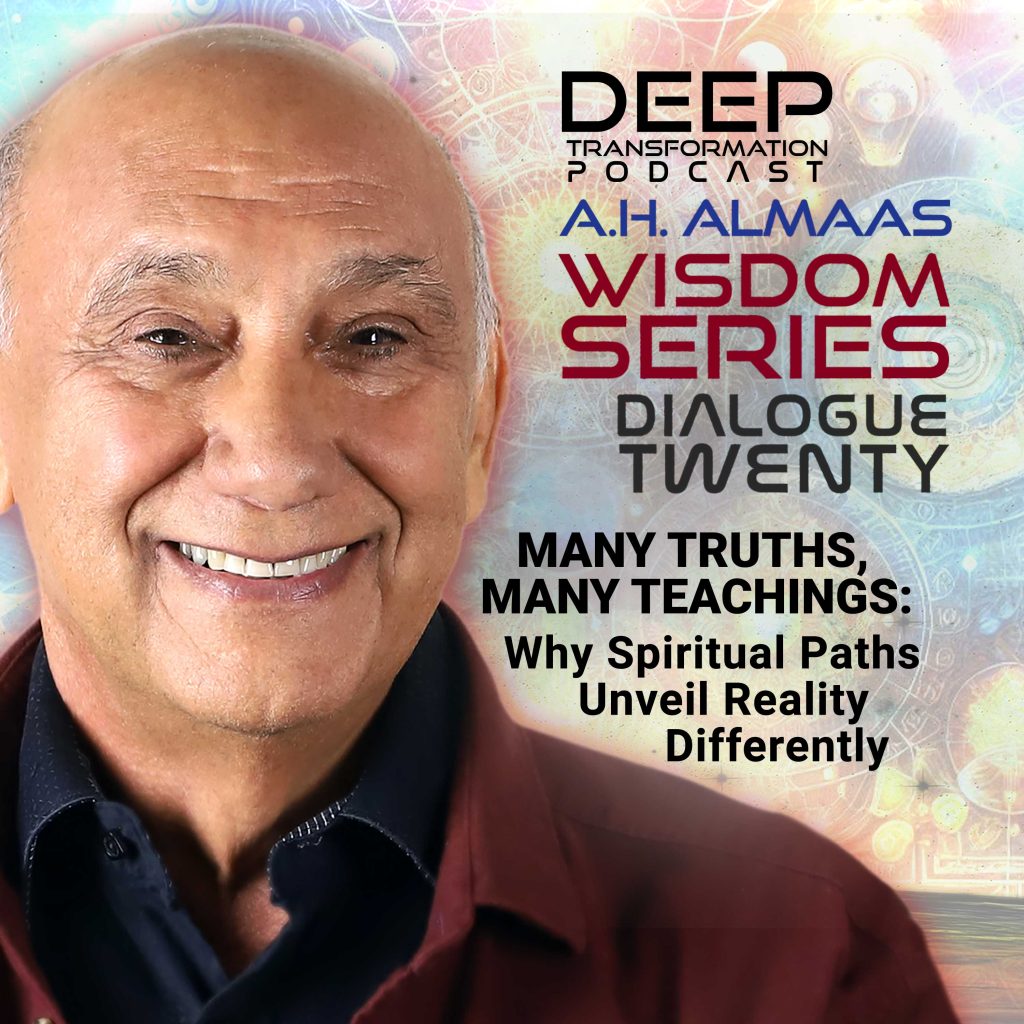
Many Truths, Many Teachings: Why Spiritual Paths Unveil Reality Differently
“Each path takes a human being deeper, vaster, bigger places… each particular logos can be seen as an expression of the optimizing force of the universe and logos.”
Ep. 240 | Co-host Roger Walsh found the novel concepts that A. H. Almaas presents in The Inner Journey Home’s Appendix G so intriguing, he asked Hameed for one last discussion to complete Deep Transformation’s systematic exploration of Hameed’s magnum opus. In Appendix G (and in this conversation), Hameed says that while there are many valid paths of awakening, different paths do not culminate in the same realization or experience. In other words, the Chinese proverb that says there are many ways to the top of the mountain, but the view is always the same is not accurate. Each spiritual teaching has its own logos, Hameed explains, its own “logic of experience and logic of practice that will naturally unfold the consciousness to open up to the secrets of reality and the depth of it, according to that particular logos.” This makes it possible for all different types of people, also from very different cultures, to “open to the perfection of reality in a way that liberates and makes sense to them.”
The logos of a spiritual teaching is not created by anyone, Hameed continues. This is reality practicing its intelligent, creative, and loving magic by manifesting through an individual or community to provide us with different ways of realizing true nature. When we find the right path, the teaching will “click,” Hameed says, and with time and practice, we may crack the code of the logos of our chosen path and fulfill our spiritual destiny. The conversation weaves in and out of the fascinating implications of Hameed’s teaching, clarifying why Eastern and Western spiritual teachings are so different, and what differentiates the logos of the Diamond Approach. In wrapping up, Roger and John acknowledge that their intensive study of The Inner Journey Home provided them with a transmission—and a transformation. Hameed agrees; by deeply contemplating this book, he says, we open ourselves to the transmission, to the understanding and experiencing of what is presented. Recorded July 16, 2026.