Skip to content
Future of Humanity
When Soul, World & God Became Separate: The Loss, the Paradox & the Promise of Integration
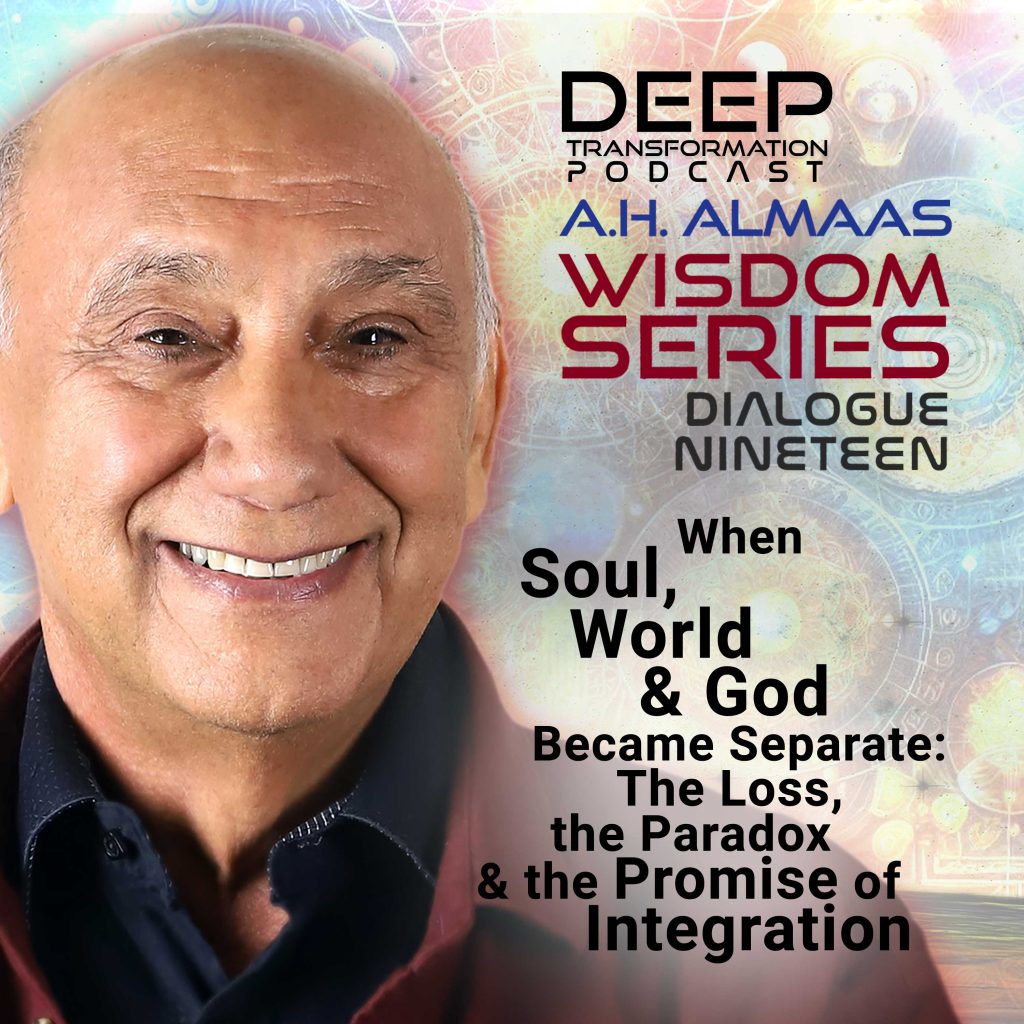
“The spiritual ground that science doesn’t deal with is needed to complete the story.”
Ep. 237 | In the 19th dialogue of the A. H. Almaas Wisdom Series, an exploration of the final chapter of The Inner Journey Home, Hameed Ali looks at the evolution of Western culture and how it happened that soul, world, and God became divided as the culture developed. Hameed explains this was a necessary evolutionary step, an inherent part of our development, and though we lost our spiritual footing in the process (with secularization came a “gaping emptiness, meaninglessness, a lack of true fulfillment”), the separation of science and Church freed science and later psychology to take off on their own trajectories, leading to great strides in our understanding of our physical world and psychological make-up. The secularization of society turned out to have plenty of benefits, including improving the physical and economic well-being of many.
But where does that leave us now, and what does the future hold? Will there be an integration of these disparate parts, where spiritual ground becomes a foundational piece of our next stage of evolution? Can the scientific perspective, with its precision and clarity of mind, be brought to bear on our inner life of spiritual inquiry as well as the outer nature of reality? In realizing that our soul needs life’s encounters to mature—meditation alone is not enough—will we find the lost “pearl beyond price” individually and possibly collectively or in small groups? Hameed concludes by telling us that the Diamond Approach is about redeeming the mind: integrating the diamond clarity of the intellect with spiritual depth. He shares his vision of fully realized scientists merging a spiritual perspective with precise and penetrating inquiry, and ends with the wish for all human beings to know: “People who are listening… it’s possible for you.” Recorded June 11, 2026.
Read MoreEmbodying Compassion: The Practice of Loving Everyone with Jack Kornfield

“You think you’re separate – you think you exist. But you’re not who you think you are. You are consciousness in drag.”
Ep. 216 (Part 2 of 2) | In Part 2 of Deep Transformation’s first episode in the What is Real Greatness Series, longtime spiritual teacher Jack Kornfield declares that in his experience real greatness is a greatness of heart. In Buddhism, greatness of heart is embodied in the ideal of the bodhisattva—one whose life is dedicated to the well-being of all. Embodying compassion is not a grim proposition, Jack explains, but a joy! The whole point of it being human happiness and inner freedom. Because of his deep understanding of compassion, Jack was invited to the Oslo Freedom Forum to counsel global activists on how to prevent burnout, and when talking to them about their outrage, he told them, “You do this because you care—that is not a loss of power, it’s actually the deep power. Tune into the care.” Greatness of heart is the great power.
Jack relates that the experience of awakening can be felt in different ways: it might feel like everything is love, perfection, emptiness, or freedom. For me, the channel is love and my practice is to love everyone, he explains. We have to love both the lion and the gazelle, he continues, and shares a poignant story of how very loving Ram Dass became towards the end of his life, loving everything, even his pain. When the conversation turns towards the potential demise of humanity, Jack wonders, will we be able to do something beneficial with our consciousness now that we’re aware that we are all connected? What is the spirit you want to lead with? he asks. What is the dance you want to do? A thoroughly thought provoking, nourishing, inspiring conversation. Recorded October 2, 2025.
Read More(Part 2) Governor Jerry Brown on Life, Power, and the Future of Humanity
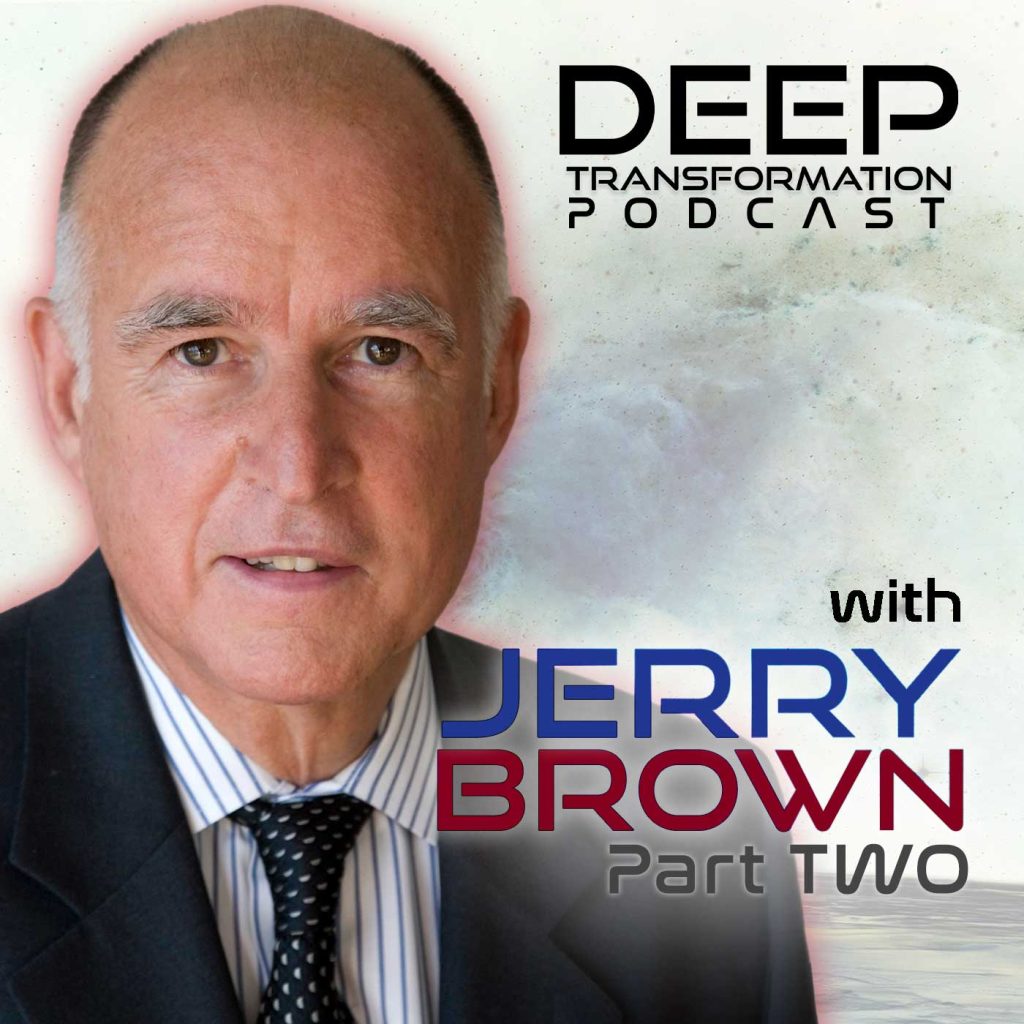
“The future is unknown, so don’t conclude that all is dark – or that all is bright! It’s unknown, so as long as we’re breathing and functioning, we have a lot to do.”
In this extraordinary, compelling conversation, visionary, activist, and long-time politician, former Governor of California Jerry Brown gets right to the heart of the things that matter most. From truth seeking on an individual level (the importance of inquiring into the depths of our reality), to the challenge of our democracy (getting a consensus in a population that has no coherence), to the problem of leadership (now it’s all about winning, which works on the football field but not for international relations), the fear and greed that drive the arms race (we’re not talking about the arms issue, and to not talk about it is to be complicit), and the existential danger of nuclear war (as important as it is underreported), Jerry nails the essence of our most pressing issues.
Jerry’s deep concern about the existential threats we face today, such as nuclear war and climate change, is matched by his enthusiasm for life and excitement over the fact that the future is unknowable. “We have to turn,” he says, “and everyone can contribute to amplifying the turn.” We discover some of the key formative events that shaped Jerry’s keenly discerning character, so evident throughout his career and still today in his eighties, and why co-host Roger Walsh describes him as a “force of nature.” This conversation is thoroughly enjoyable, inspirational, eye opening, and disturbing too. “We are on the brink, but no one wants to hear it,” Jerry says. “How do you speak the truth in a way it can be heard?” Recorded August 7, 2025.
Read MoreGovernor Jerry Brown on Life, Power, and the Future of Humanity (Part 1)
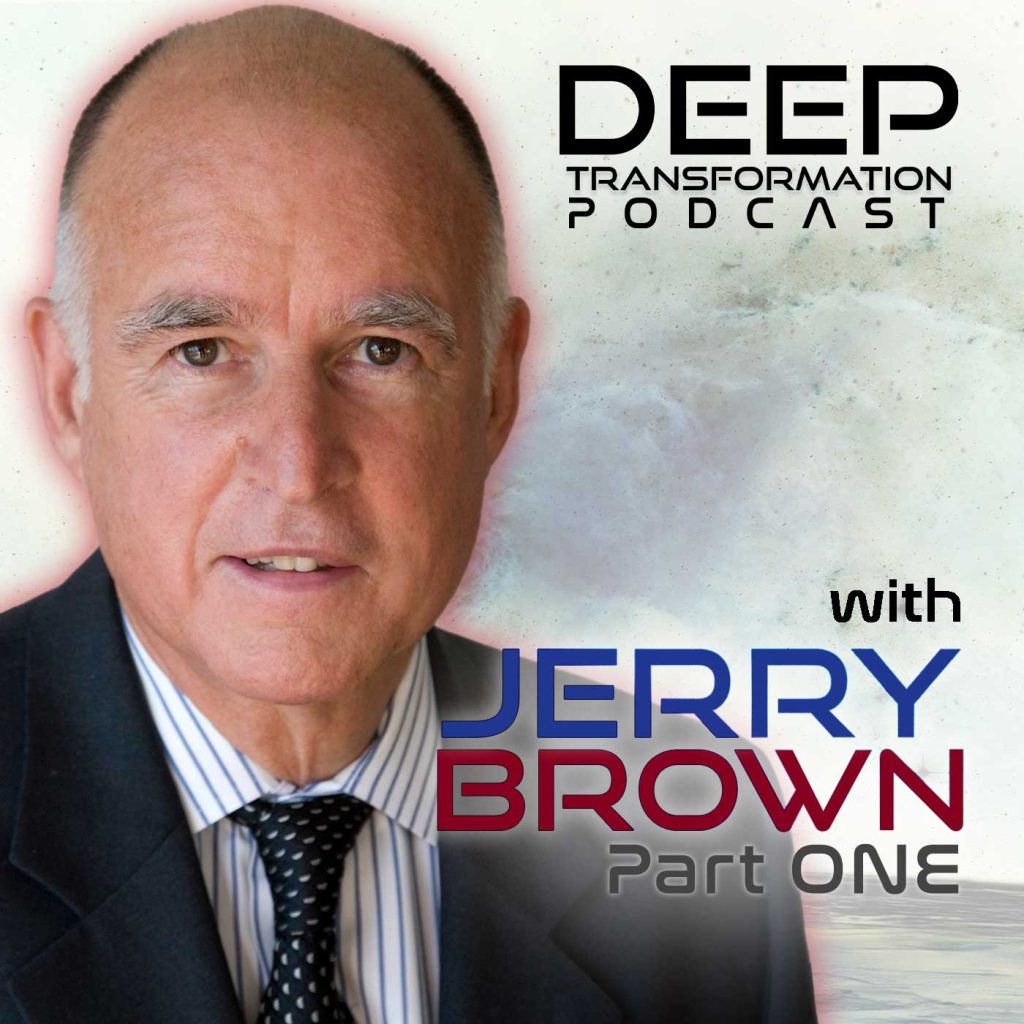
“We should not sleep in the delusion that things are better than they are.”
Ep. 206 (Part 1 of 2) | In this extraordinary, compelling conversation, visionary, activist, and long-time politician, former Governor of California Jerry Brown gets right to the heart of the things that matter most. From truth seeking on an individual level (the importance of inquiring into the depths of our reality), to the challenge of our democracy (getting a consensus in a population that has no coherence), to the problem of leadership (now it’s all about winning, which works on the football field but not for international relations), the fear and greed that drive the arms race (we’re not talking about the arms issue, and to not talk about it is to be complicit), and the existential danger of nuclear war (as important as it is underreported), Jerry nails the essence of our most pressing issues.
Jerry’s deep concern about the existential threats we face today, such as nuclear war and climate change, is matched by his enthusiasm for life and excitement over the fact that the future is unknowable. “We have to turn,” he says, “and everyone can contribute to amplifying the turn.” We discover some of the key formative events that shaped Jerry’s keenly discerning character, so evident throughout his career and still today in his eighties, and why co-host Roger Walsh describes him as a “force of nature.” This conversation is thoroughly enjoyable, inspirational, eye opening, and disturbing too. “We are on the brink, but no one wants to hear it,” Jerry says. “How do you speak the truth in a way it can be heard?” Recorded August 7, 2025.
Read MoreJeremy Lent (Part 2) – Big Picture Systems Thinking: A Key Practice for Understanding, Transforming, and Preserving Civilization

Ep. 142 (Part 2 of 2) | Award-winning author of The Web of Meaning and founder of the Deep Transformation Network, Jeremy Lent, relates how his discovery of systems thinking opened the door to a whole new way of making sense of the world and illumined his in depth exploration of what creates meaning. In looking into what forms concepts like God, soul, humanity, nature, and science, Jeremy came to understand the thinking that has led to the existential crisis we face now, then began to explore what it would take to break out of the worldview that has caused so much destruction on so many levels. Jeremy integrates systems thinking with concepts from evolutionary biology, neuroscience, ecology, and traditional and indigenous wisdom, forming a holistic view of science, where “maybe the distinction between science and spirituality isn’t really valid.”
Jeremy’s heartfelt intention is to act as translator—to make it enjoyable for people to explore difficult concepts like consciousness and evolutionary biology they might otherwise steer away from—as well as be a catalyst for large-scale transformation. His vision of a potential future “ecological civilization” builds on the evolutionary success of life itself—ecosystems living in mutual symbiosis—and includes the idea of “islands of coherence” which would provide a bridge from a disintegrating society to a new and flourishing one. Systems thinking, like indigenous wisdom, recognizes the deep connectedness of all things, a realization, Jeremy points out, that leads to the knowing that nothing is inevitable and the choices we make matter. Jeremy leaves us with a sense of agency and of liberation, as well as a sense of responsibility to work together in the shaping of a life-affirming, sustainable future. Recorded June 20, 2024.
Read MoreJeremy Lent (Part 1) – Big Picture Systems Thinking: A Key Practice for Understanding, Transforming, and Preserving Civilization

Ep. 141 (Part 1 of 2) | Award-winning author of The Web of Meaning and founder of the Deep Transformation Network, Jeremy Lent, relates how his discovery of systems thinking opened the door to a whole new way of making sense of the world and illumined his in depth exploration of what creates meaning. In looking into what forms concepts like God, soul, humanity, nature, and science, Jeremy came to understand the thinking that has led to the existential crisis we face now, then began to explore what it would take to break out of the worldview that has caused so much destruction on so many levels. Jeremy integrates systems thinking with concepts from evolutionary biology, neuroscience, ecology, and traditional and indigenous wisdom, forming a holistic view of science, where “maybe the distinction between science and spirituality isn’t really valid.”
Jeremy’s heartfelt intention is to act as translator—to make it enjoyable for people to explore difficult concepts like consciousness and evolutionary biology they might otherwise steer away from—as well as be a catalyst for large-scale transformation. His vision of a potential future “ecological civilization” builds on the evolutionary success of life itself—ecosystems living in mutual symbiosis—and includes the idea of “islands of coherence” which would provide a bridge from a disintegrating society to a new and flourishing one. Systems thinking, like indigenous wisdom, recognizes the deep connectedness of all things, a realization, Jeremy points out, that leads to the knowing that nothing is inevitable and the choices we make matter. Jeremy leaves us with a sense of agency and of liberation, as well as a sense of responsibility to work together in the shaping of a life-affirming, sustainable future. Recorded June 20, 2024.
Read More